
Roof Types for Homes and How Each Affects Insurance
See the eight roof styles found on most homes side by side, weigh the pros and cons of each, and learn why a hip roof vs a gable roof can change your Florida home insurance options.
Last updated: October 25, 2026
What are the different types of roofs for homes?
The most common roof types for homes are hip, gable, flat, cross-gable, Dutch gable, shed, mansard and gambrel roofs. A hip roof slopes down on all four sides and holds up best in high wind. A gable roof has two slopes that meet at a ridge, which makes it simple and affordable to build but leaves its triangular end walls exposed to the wind. In Florida, roof shape matters beyond looks: it is one of the features a wind mitigation inspection records for insurance credits.
Roof types do more than shape the look of a house. The shape of your roof decides how it handles wind and rain, what it costs to build and repair, and how home insurance carriers in Florida see your home. This guide walks through the eight roof styles found on most homes, with the pros and cons of each, then shows how your roof’s shape, age and covering affect your insurance.
Roof Styles Compared Side by Side
| Roof type | Shape | Wind performance | Insurance angle |
|---|---|---|---|
| Hip | Slopes on all four sides | Strongest common shape in high wind | Can earn the hip-roof wind credit |
| Gable | Two slopes with triangular end walls | End walls need bracing | Usually rated as “other” roof shape |
| Flat | Nearly level, with a slight slope | Low profile, but edges can lift | Drainage and leaks draw closer review |
| Cross-gable | Two or more gables that meet | More edges and valleys to secure | Higher rebuild cost can raise dwelling coverage |
| Dutch gable | Hip roof with a small gable at the top | Close to a hip roof | The inspector measures how much is hip |
| Shed | One single slope | The high edge takes the most uplift | Simple frame, simpler repairs |
| Mansard | Four steep lower slopes and a flat top | Steep sides catch wind | Costly repairs raise the rebuild cost |
| Gambrel | Two slopes per side, barn style | Tall sides and gable ends catch wind | Large gable ends add wind risk |
The 8 Most Common Roof Shapes
Each roof shape below covers what it looks like, where you see it and the trade-offs that matter to homeowners and to the carriers that insure them.
Hip Roof
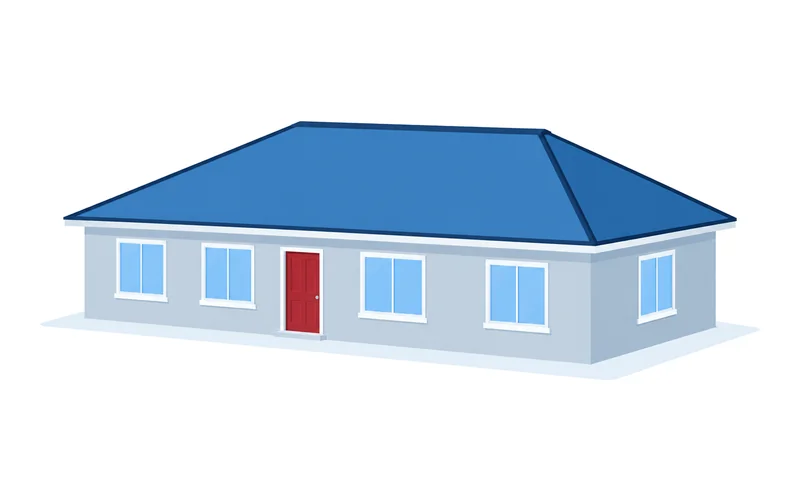
A hip roof slopes down toward the walls on all four sides, so there are no tall, flat end walls for the wind to push against. The four slopes brace each other, which keeps the frame stiff and stable in a storm.
- Pros: the strongest common roof shape in high wind, eligible for the hip-roof credit on a wind mitigation inspection, and eaves on every side that shade the walls and windows.
- Cons: more complex and more costly to build than a gable roof, less attic space, and hip and valley seams that need careful flashing to stay watertight.
Gable Roof
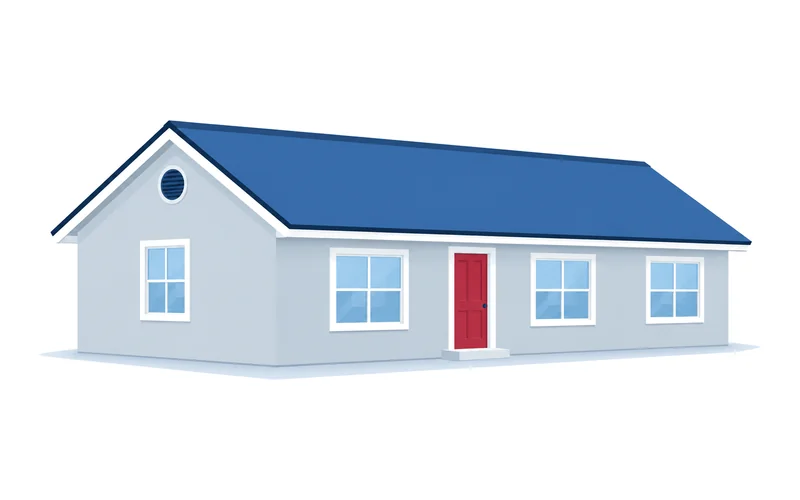
A gable roof has two sloped sides that meet at a ridge, with a triangular wall, the gable, at each end. It is one of the simplest roofs to frame, which is why so many homes have one.
- Pros: a lower building cost, a roomy attic for storage and ventilation, and fast runoff in heavy rain.
- Cons: the gable end walls take the full force of the wind, and an unbraced gable end can fail and open the attic to the storm. Most gable roofs are rated as “other” roof shape on a wind mitigation inspection, so they miss the hip-roof credit.
Flat Roof
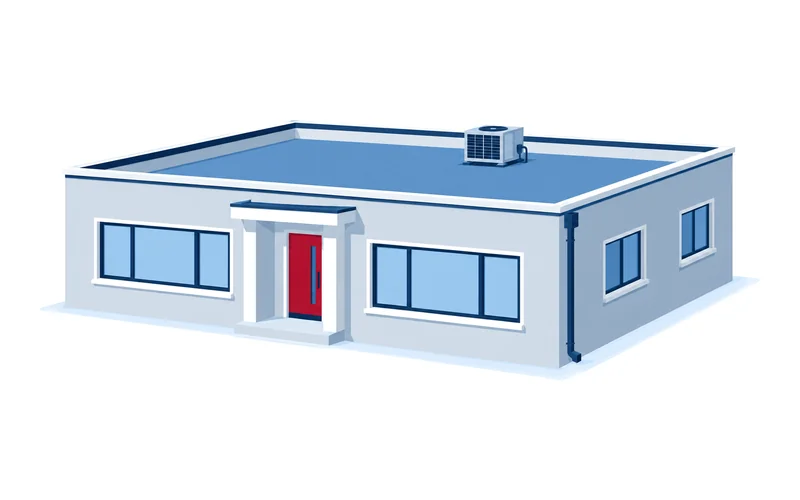
A flat roof looks level but has a slight slope, so rain drains to the edges or to roof drains. In Florida you see it on modern homes, additions, porches and condo buildings. On a condo building, the roof usually falls under the association’s master policy, not the owner’s unit policy.
- Pros: lower material cost, easy access for solar panels and AC units, and usable rooftop space.
- Cons: standing water and clogged drains lead to leaks, the roof membrane ages faster under the Florida sun, and the edges can peel in high wind. On Florida’s wind mitigation form, the flat-roof category is for buildings with five or more units, so a single-family flat roof usually counts as “other.”
Cross-Gable and Complex Roofs
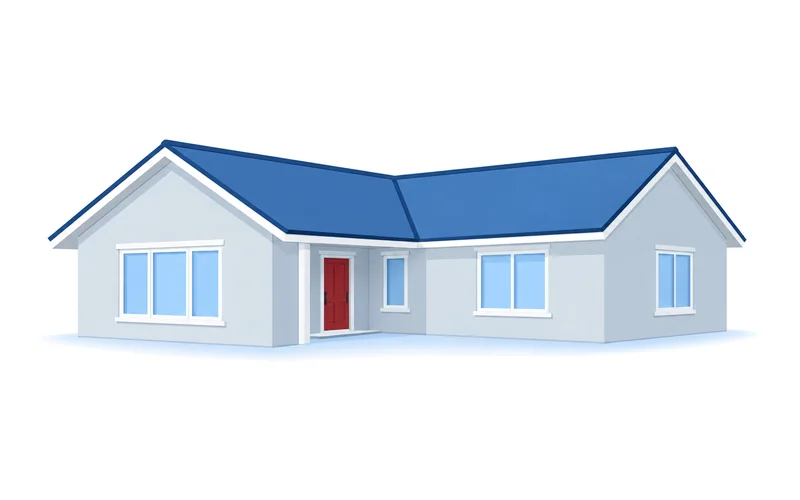
A cross-gable roof joins two or more gable sections at an angle, often over an L-shaped or T-shaped house. Complex roofs go further and mix hips, gables, dormers and valleys on one home.
- Pros: room for vaulted ceilings, more daylight through dormers and a custom look from the street.
- Cons: every valley and joint is a place where water can get in, and the extra framing raises the cost to rebuild. A higher rebuild cost calls for a higher dwelling coverage limit (Coverage A), which can raise the premium.
Dutch Gable Roof
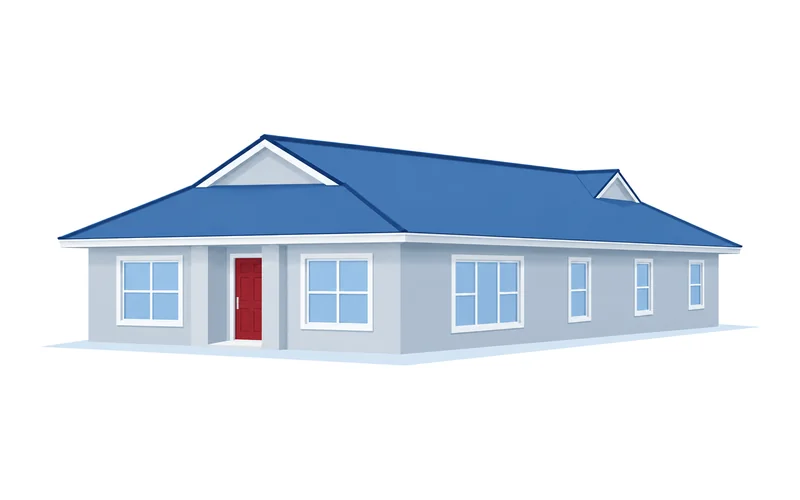
A Dutch gable roof, also called a gablet roof, is a hip roof with a small gable set on top of the ridge.
- Pros: most of the wind-bracing strength of a hip roof, plus extra attic space and a spot for a vent in the small gable.
- Cons: the joint where the gable meets the hip adds seams to seal, and it costs more to build than a plain hip or gable roof.
Shed Roof
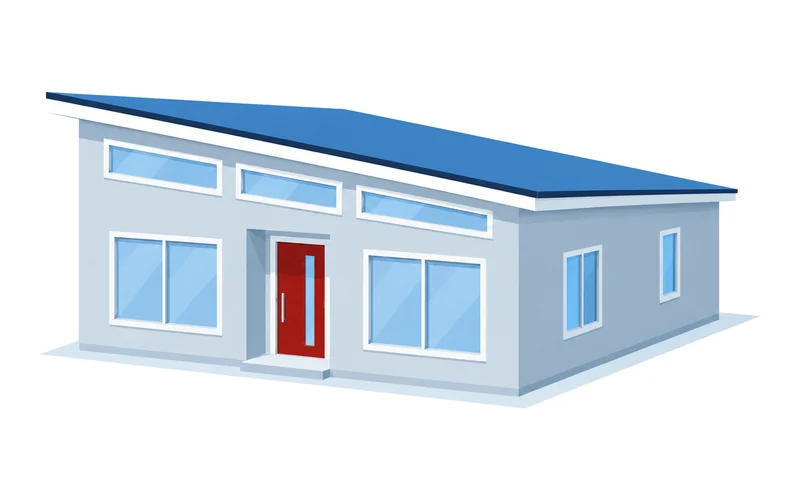
A shed roof, also called a mono-slope or skillion roof, is one flat plane set at an angle. It shows up on modern homes, additions and porches.
- Pros: simple framing, quick drainage in one direction and room for tall windows on the high wall.
- Cons: the high edge faces strong uplift in a storm, and the gutter on the low side carries all the runoff, so it needs regular cleaning.
Mansard Roof
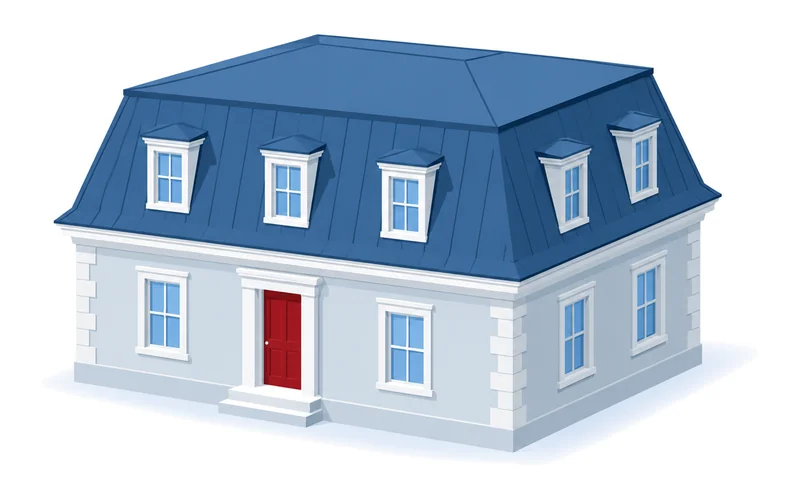
A mansard roof has four steep lower slopes, often with dormer windows, topped by a nearly flat upper roof. The design adds a full living floor under the roof.
- Pros: extra living or attic space and a classic French look.
- Cons: costly to build and repair, steep sides that catch the wind and a low-slope top that can hold water. Those repair costs carry into the dwelling coverage your policy needs.
Gambrel Roof
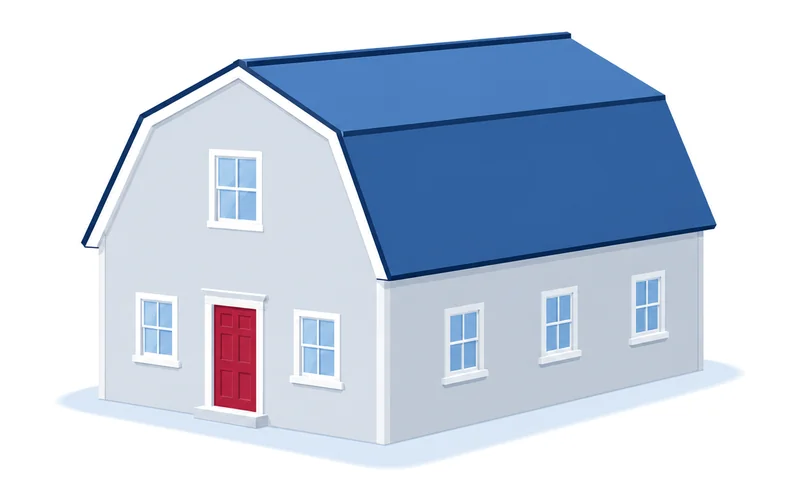
A gambrel roof has two slopes on each side, with the lower slope much steeper than the upper one. It is the barn-style roof you see on farmhouses and storage sheds.
- Pros: plenty of headroom on the upper floor or in the attic, and a simple frame.
- Cons: the tall, steep sides and large gable ends catch the wind, which makes it one of the more wind-vulnerable shapes in hurricane country.
Hip Roof vs Gable Roof for Florida Homes
The hip roof vs gable roof question comes up more than any other in Florida, because the answer shapes how your home rides out a hurricane and how carriers rate it.
- Wind pressure: wind-tunnel studies cited by the U.S. Department of Energy’s Building America program found peak wind pressures up to 50% lower on hip roofs than on gable roofs.
- Structure: the four slopes of a hip roof brace each other. A gable roof depends on bracing at its end walls, and FEMA documented gable end walls that failed during Hurricane Andrew.
- Cost and space: a gable roof costs less to build and gives you more attic space. A hip roof costs more but needs less added bracing to stand up to wind.
- Insurance: a hip roof can earn the roof-shape credit on a wind mitigation inspection. A gable roof can still earn credits for the other features the inspection checks, such as roof deck attachment, hurricane straps and a secondary water barrier.
If you already own a gable-roof home, bracing the gable ends and strengthening the roof-to-wall connections are common hardening upgrades. Florida’s My Safe Florida Home program has helped fund hardening work like this when its funding is open.
How Carriers Rate Your Roof for Home Insurance
Carriers in Florida look at your roof from several angles at once:
- Roof shape: a wind mitigation inspection records the roof as hip, flat or other. Florida law requires carriers to give wind mitigation credits for wind-resistant features, and roof shape is one of them. To count as hip, the roof must be mostly hip, with only a small share of other shapes.
- Roof covering: the inspector checks that the shingles, tile or metal meet the Florida Building Code.
- Roof deck and connections: how the roof deck is nailed down and how the roof is tied to the walls with clips or straps carry credits of their own.
- Roof age and condition: an older or worn roof narrows the list of carriers willing to write the home.
- Rebuild cost: complex and steep roofs cost more to replace, so they raise the dwelling coverage your policy needs.
Roof Age Rules That Keep Your Policy in Place
A worn or damaged roof can lead a carrier to non-renew a Florida home policy, even when the rest of the house is in good shape. Florida law sets limits on how carriers use roof age:
- Roofs under 15 years old: a carrier cannot refuse to write or renew your policy just because of the roof’s age.
- Roofs 15 years or older: you can have the roof inspected by an authorized inspector, at your expense, before a carrier requires a replacement. If the inspection shows five or more years of useful life left, age alone cannot be the reason a carrier turns you away.
- The age clock: roof age counts from the date the entire roof surface was last built or replaced, so keep the permit and the final inspection report.
- Repairs after a storm: on many roofs, a repair only has to bring the damaged section up to code, even when the damage covers a quarter or more of the roof. The rule applies if your roof was built or replaced under the Florida Building Code edition in force for more than 15 years.
The law protects you from a refusal based on age alone. It does not stop a carrier from acting on real damage, so keep the roof maintained and the paperwork in one folder.
Choosing a Roof Type for a New Build or Re-Roof
The shape and covering you choose stay with your home for decades, and so do their effects on your insurance:
- Building new: a hip roof gives you the best wind performance and the roof-shape credit from day one.
- Re-roofing a home: the shape rarely changes, so the gains come from a code-approved covering, a sealed roof deck as a secondary water barrier and stronger roof-to-wall connections.
- New inspection: book a new wind mitigation inspection once the work passes final inspection, so every new feature reaches your carrier.
- New quotes: a new roof can open carriers that declined the home before.
That last step is where an independent agency helps most. We insure Florida homes with every roof type on this page, and we know which carriers write each one. Tell us about your roof and compare quotes from multiple A-rated carriers on our Florida home insurance page.
Who helps Florida homeowners insure a home with any roof type?
American US Insurance, an independent insurance agency in Miami, quotes homes with hip, gable, flat and complex roofs every day. Our licensed agents put your roof's shape, age, covering and wind mitigation report in front of multiple A-rated carriers, because each carrier sets its own roof rules. A roof one company declines can be a roof another company writes.