
Self Storage · Florida
Florida Self Storage Facility Insurance for Property Owners
A unit fire, burglarized storage row, or disputed lien sale can expose facility owners to heavy liabilities. We insure Florida self-storage properties across multiple A-rated carriers.
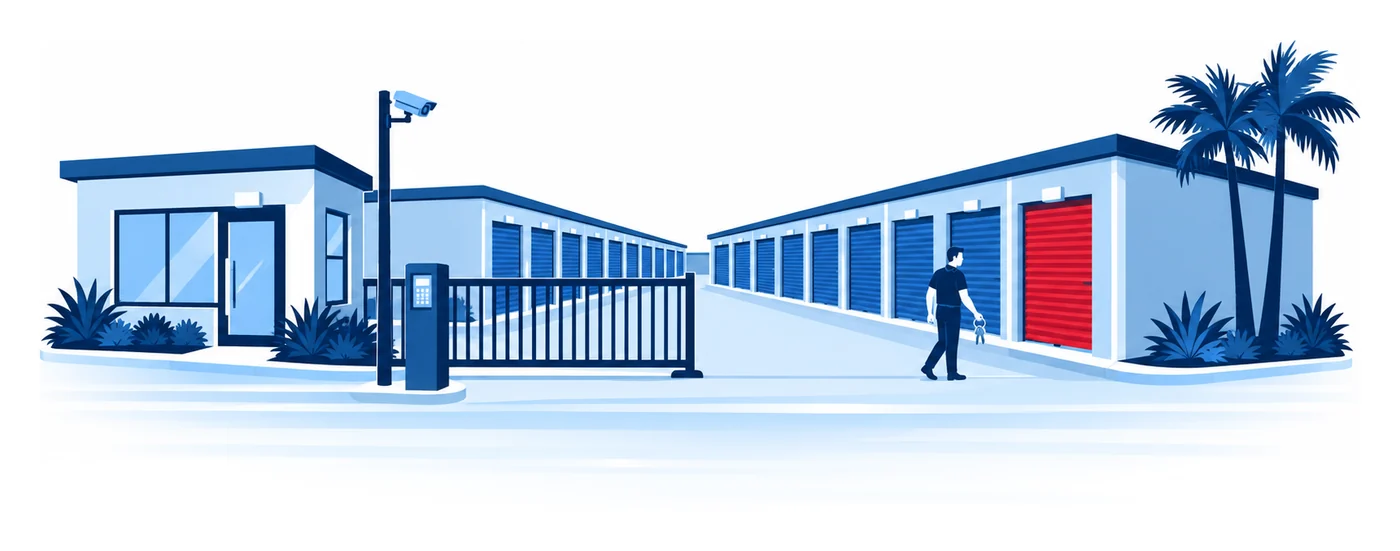
What is self storage insurance in Florida?
Self storage insurance is a commercial policy for owners of storage facilities, from mini storage sites to large climate-controlled buildings. It insures the buildings, the office, the gates and your equipment, and it pays the rent you lose after a covered loss. It covers your liability when a customer is hurt on the property. Many storage policies add coverage for customers' goods and for claims over lien sales, the two risks that set this business apart. We compare self storage insurance across multiple A-rated carriers.
Self Storage Lien Sales Under Florida Law
Florida's Self-storage Facility Act lets an owner sell a delinquent tenant's property, but only through the steps in § 83.806, Florida Statutes. A missed step can turn into a lawsuit.
Rent goes unpaid
The owner holds a lien on the property stored in the unit.
Written notice
The tenant gets an itemized notice in person, by email or by first-class mail, with at least 14 days to pay.
Public advertisement
The sale is advertised once a week for 2 weeks in a newspaper of general circulation.
The sale
The sale takes place at least 15 days after the first ad, and the tenant can redeem before it by paying the lien.
What Storage Facility Insurance Covers
A self storage policy has to protect the buildings you own and the goods your tenants leave with you.
Buildings and office
The storage buildings, the office, gates, fences and security systems, against fire, wind, theft and vandalism.
General liability
Injuries to customers and visitors on the property, like a fall in a hallway or a gate that closes on a car.
Customer goods legal liability
Pays when a tenant's stored property is damaged and you are legally responsible, such as a roof leak you did not fix. A warehouse that stores pallets for businesses, rather than units for tenants, is covered on our warehouse insurance page.
Sale and disposal liability
Defends you when a tenant says a lien sale or the disposal of goods was wrongful.
Storage Owner Insurance vs. Storage Unit Insurance
Two different buyers search for storage insurance. This page is for the owner; here is where the tenant fits.
The owner's policy
Covers the facility, the business and the owner's liability, including claims over customers' goods and lien sales. Many owners also offer tenants a protection plan or an insurance program, which brings in income and keeps small claims off the owner's policy. A Florida limited license lets a storage facility offer insurance on stored goods to its tenants (§ 626.321(1)(g), Florida Statutes).
The tenant's coverage
Renting a unit? Your stored belongings may already be covered by your renters insurance or homeowners policy, often up to a share of your personal property limit. Many facilities ask for proof of coverage before you move in.
Have This Ready for Your Self Storage Insurance Quote
- The address, the number of units and buildings, the year built and any climate-controlled space.
- Your security features: gates, cameras, lighting and access codes.
- Your lease, your lien sale procedure and any tenant protection program.
- Your gross rental income and five years of claims history.
Which self storage insurance companies write in Miami?
American US Insurance is an independent insurance agency in Kendall that places self storage insurance for facility owners in Miami and across Florida. Self storage is a niche market, and only some carriers write it with customer goods and sale and disposal coverage built in. We compare those programs across multiple A-rated carriers and match the limits to your lease and your lien process. We insure single-site owners and small portfolios in Miami-Dade, Broward and Palm Beach.
Additional Business Insurance Options
Self Storage Insurance Guides

Business Owners Policy vs. General Liability: Which Fits?
Business owners policy vs. general liability: a BOP adds property and business income coverage to liability. How to tell which your Florida business needs.
Read More →
Payment Bond vs. Performance Bond: How Each One Works
Payment bond vs. performance bond: one guarantees the job gets finished, the other that subs and suppliers get paid. When Florida public jobs need both.
Read More →Get a Self Storage Insurance Quote
Tell us about your facility, total units, and lien procedures. We compare multiple A-rated Florida carriers on property, customer goods, and disposal liability side by side.
- No obligation, no pressure
- Renewal and claims help after you buy
- A licensed agent compares carriers
Request My Self Storage Quote
Common Questions